


[Event Report] The 55th Special Breakfast Meeting – Issues and Prospects for Social Security Reform (September 30, 2024)
date : 11/30/2024

![[Event Report] The 55th Special Breakfast Meeting – Issues and Prospects for Social Security Reform (September 30, 2024)](https://hgpi.org/en/wp-content/uploads/sites/2/013_W9A1950_web.jpg)
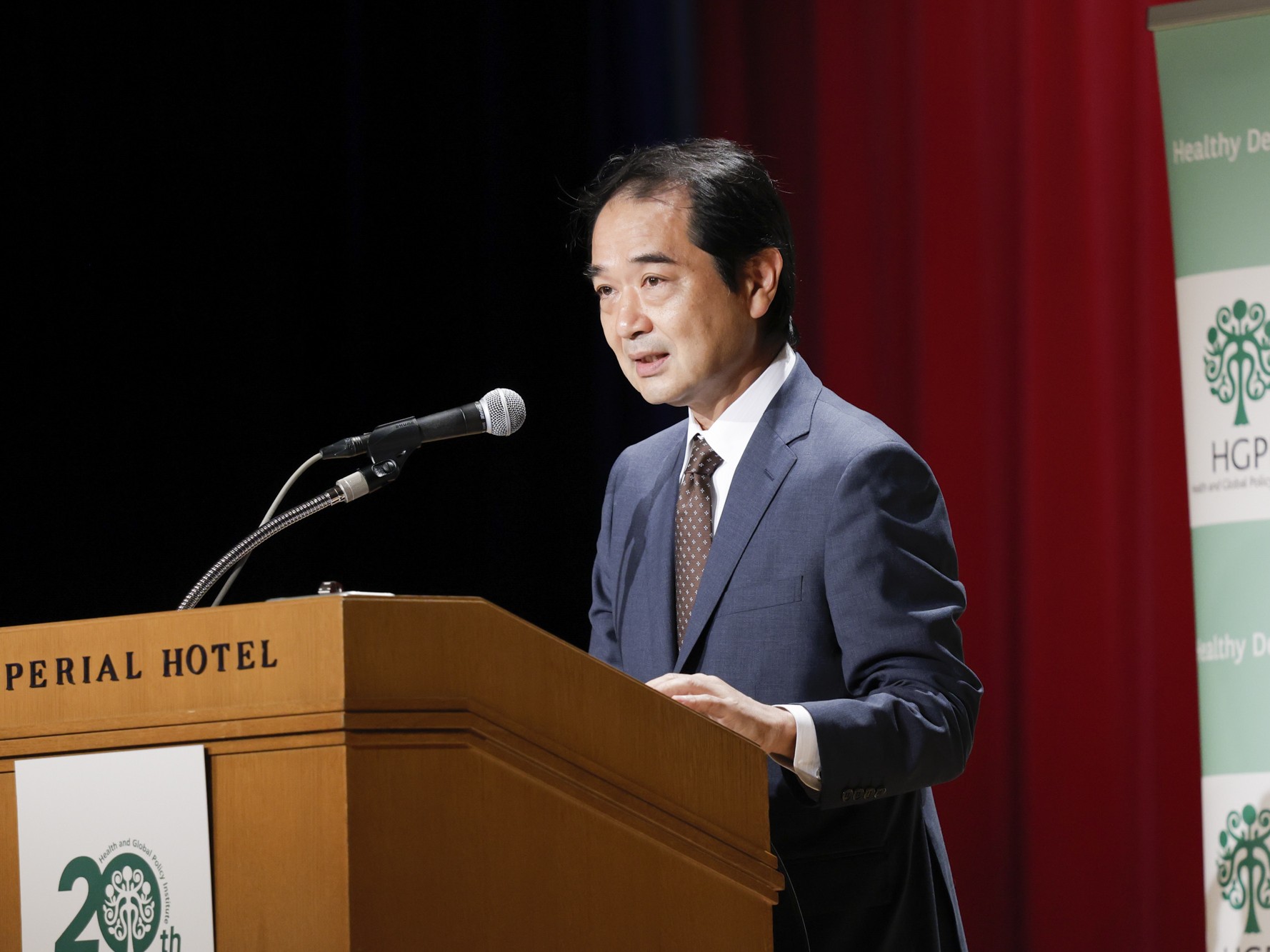
The Health and Global Policy Institute (HGPI) 55th Special Breakfast Meeting was held on September 30, 2024 and featured Mr. Hirotaka Unami, Director-General of the Budget Bureau at the Ministry of Finance. Mr. Unami spoke about recent circumstances surrounding social security, infectious disease countermeasures implemented during the COVID-19 pandemic, and lessons learned from those efforts.
Key points of the lecture
- Although social security expenditures continue to increase as Japan’s population ages, as revenue generated through taxes continues to fall short of expenditures covered by public funds, there is an imbalance between benefits and burdens. It will be essential to consider a number of measures to ensure social security system sustainability, such as increasing the growth rate of the economy, increasing the burden borne by citizens, and controlling the expansion of benefits.
- There are three key aspects to healthcare system reform: reexamining the ideal scope of insurance benefits; considering methods of efficiently providing high-quality medical services; and ensuring that the financial burden of maintaining that system is fairly distributed. Focusing on the efficient provision of high-quality medical services, it will be essential to advance simultaneous efforts for the medical service fee schedule, the drug pricing system, and the healthcare provision system.
- Among lessons learned from countermeasures to the COVID-19 pandemic, the establishment of the Cabinet Agency for Infectious Disease Crisis Management strengthened the Government’s capacity to serve as a command tower and created a system for rapid response. As one result of these efforts, facilities for the domestic production of vaccines began operations, thus leading to the creation of a vaccine production system that does not rely on foreign capital. However, steps must be taken to further strengthen domestic drug discovery.
■Circumstances surrounding social security
The balance between benefits and burdens and the sustainability of the social security system
Ensuring the sustainability of the social security system is not only a matter rooted in its design, but is also an item that is inherently linked to ensuring sound fiscal policy for Japan. As social security is the main factor for growing annual expenditures, social security reform is an issue that must be addressed to achieve sound fiscal policy. Despite these circumstances, examining national finances, we see that about one-third of the initial budget in FY2024 was to be covered by issuing government bonds. Japan’s inability to generate sufficient tax revenue to cover the increase in social security expenditures (which is occurring alongside the aging of the population) and in government bonds has resulted in a budget deficit. This is the other side of the coin for the imbalance between benefits and burdens in social security, and it is why we now face challenges for the sustainability of the social security system.
It has been pointed out that compared to other member states of the Organisation for Economic Cooperation and Development (OECD), benefits and burdens in Japan are in a state of imbalance. Over the past thirty years, the cost of social security benefits increased by approx. 2.9 times, while the burden of insurance premiums increased by approx. 2.0 times and public funds from the national Government and local governments expanded greatly by approx. 4.0 times. The key driver of increased burden has been the expansion of systems that depend greatly on public funds, such as the Medical Care System for the Advanced Elderly or long-term care. This expansion resulted in the need for ¥80 trillion in insurance premiums and ¥37.7 trillion in treasury contributions in FY2024. As tax revenues have been insufficient to cover treasure contributions, government bonds have been issued to cover the shortfall. While the Government has continued to increase the burden of insurance premiums to secure financial resources for insurance, this has resulted in less disposable income for members of the working-age population and has become a major point of contention.
During the period of economic growth following World War II, Japan has walked the path of a welfare state through the expansion of the National Health Insurance System and welfare policies. However, slowing economic growth that began in the 1990s and rapid demographic transformation due to population aging and birthrate decline have caused benefits to greatly exceed burdens. This makes the social security system unsustainable. It is essential that we reform this system by increasing the economic growth rate, expanding the burden for citizens, curbing the growth of benefits, or implementing some combination of these measures.
Social security and economic growth
Japan’s economy currently stands at a turning point at which it will transition from a deflationary economy to a new growth economy. The key to transitioning to a growth economy will be increasing income and productivity, with higher wages as the starting point. However, some are concerned that the effects of higher wages will be offset by rate hikes for social security premiums. In fact, the growth of insurance, healthcare, and long-term care-related costs have outpaced growth in employee compensation over the past decade, and there have been rate hikes in insurance premiums to compensate for this difference. In addition, due to the equal impacts of factors like changes in population size, population aging, and the development of new pharmaceuticals and medical technologies, national healthcare expenditures have greatly outpaced growth in employee compensation and nominal GDP over the past fifteen years and continue to expand. As the economy transitions to a new stage, we require reforms that control both insurance benefit costs and insurance premium burdens while responding to economic trends, price fluctuations, and other such factors in healthcare and long-term care.
Enhancing labor productivity among people serving in healthcare and long-term care will also be essential. While it has been projected that the workforce in the healthcare and welfare sectors will expand by 2040, at the same time, a number of actions aiming to create industries that can provide high-quality services with fewer workers must also be taken. These include utilizing information technology (IT) to improve productivity, simplifying administrative procedures, and expanding long-term care facilities. Such measures will make it possible to increase per capita income for healthcare and long-term care professionals and to shift the workforce to other sectors that require labor, such as information and communications or manufacturing. Doing so will be extremely important for Japan’s economic growth.
■Perspectives on social security reform
Past developments in the creation of the Social Security System Oriented to All Generations
Three initiatives will be important for ensuring social security system sustainability and promoting reform: 1) implementing structural reforms to enhance growth potential; 2) securing sources of tax revenue for social security (the “Comprehensive Reform of Social Security and Tax”); and 3) curbing the growth of social security benefits. In this context, the “Social Security System Oriented to All Generations” aims to enable members of all generations to live with peace of mind by building a sustainable system through the comprehensive review of various items including pensions, healthcare, long-term care, and child-rearing support, with a particular focus on expanding financial resources for younger generations, including child-rearing households. Key efforts advanced under the Aso, Noda, and Abe Cabinets as part of this initiative have included utilizing stable financial resources generated through consumption tax rate hikes to make early childhood education free, to eliminate daycare waiting lists for children, and to improve compensation for childcare and long-term care personnel. Additionally, the Suga Cabinet advanced health insurance system reform, strengthened measures for birthrate decline, secured childcare arrangements for more children, and made infertility treatment eligible for insurance coverage. The Kishida Cabinet secured ¥3.6 trillion through the Children’s Future Strategy and the Acceleration Plan and advanced efforts to increase income for younger generations, to expand support for all children and child-rearing households, and to encourage more households to secure dual incomes while sharing child-rearing duties.
In the future, further action must be taken to ease the burden of social insurance premiums that will grow even heavier for working-age generations. Past actions taken from this perspective include increasing out-of-pocket payments for people ages 70 to 74 or for senior citizens with incomes equivalent to those of people of working age. In the future, while following the reform schedule, the Government will continue examining its approach to structuring burden by ability to pay rather than by age through efforts such as taking financial income into consideration or by revising criteria for determining what income levels are equivalent to people of working age while taking financial assets and other holdings into account.
Reform of the health insurance system
When reforming the health insurance system to ensure it is sustainable while continuing to deliver high-quality healthcare, three perspectives will be important: providing high-quality care in an efficient manner, reviewing the ideal scope of insurance benefits, and ensuring burden is fairly distributed. Focusing on the provision of high-quality care in an efficient manner, it will be essential to advance simultaneous efforts for the medical service fee schedule, the drug pricing system, and the healthcare provision system.
First, regarding the medical service fee schedule, the FY2024 revision introduced combined measures to increase compensation for people in specific fields (such as nursing staff or rehabilitation specialists) while streamlining and optimizing the content of medical service fee reimbursements, centered on clinics. During future revisions of the medical service fee schedule, discussions should place greater emphasis on data, and steps must be taken to visualize circumstances surrounding business operations at healthcare institutions by utilizing and improving the database for information on such operations, in accordance with the Medical Care Act. Such efforts should include making it mandatory for health institutions to report salaries and numbers of employees by job category.
Next is the drug pricing system. While premiums for new drug development were recently strengthened, in the current system, when a few new indications or new formulations are included for drugs that are already listed, those drugs are evaluated as new drugs. Ensuring sound insurance finances while enabling innovation in new drug development will require more rigorous review of how new drugs are evaluated. Regarding the evaluation of new drugs, it will also be important to implement a system designed to encourage innovation in drug discovery from the perspective of addressing problems like drug lag (when the launch of new drugs in the domestic market is delayed) and drug loss (when companies avoid development in Japan). Other issues that require consideration include the ideal methods of utilizing the Mixed Medical Services Program, reinforcing the drug discovery ecosystem as a form of industrial policy, and restructuring the drug discovery industry.
Another area that requires attention is the scope of insurance benefits. To ensure Japan maintains a sustainable system in which public insurance prevents people from facing financial burdens due to expensive medical costs, the scope of what truly requires insurance coverage must be reviewed and optimized in an ongoing manner. Specific actions that should be taken include promoting self-medication using over-the-counter (OTC) drugs and examining the ideal structure of co-payments for drugs.
Finally, from the perspective of reforming the healthcare provision system, we must establish a system that makes full use of primary care physicians through the steady implementation of the Primary Care Physician Function Reporting System. At the same time, it will also be necessary to strengthen efforts to provide patients with information on the track records of treatments or on medical resources so they can make appropriate choices. Action must be taken with regard to Regional Medical Care Visions, as well. In addition to optimizing the distribution of care beds in accordance with necessary amounts for 2025 described in current Regional Medical Care Visions, consideration must also be given to new Regional Medical Care Visions that include primary care physician functions and in-home care in the future. As for efforts to address the uneven distribution of physicians, while optimizing the number of openings at medical schools in accordance with circumstances surrounding population decline, economic incentives and regulatory measures must be combined to eliminate uneven distributions among regions or medical specialties.
■Lessons learned from COVID-19 countermeasures
Reinforcing command tower capacity and establishing a health crisis management system
Utilizing lessons learned over the course of COVID-19 countermeasures, reforms to prepare for future pandemics are now advancing. First, recognizing the importance of having a “command tower,” the Cabinet Agency for Infectious Disease Crisis Management was established within the Cabinet Secretariat. Next, the Government built a system for rapid response to issues related to scientific knowledge and risk communication by establishing the Japan Institute for Health Security (JIHS) and a department for infectious disease control, the latter of which was created by merging related departments within the Ministry of Health, Labour and Welfare (MHLW).
Efforts and challenges for securing the healthcare provision system
Issues related to the healthcare provision system that emerged during the COVID-19 pandemic included securing care beds, establishing outpatient fever clinics, coordinating hospitalizations, and responding to the needs of people recuperating at home or in welfare facilities. Reflecting on these issues, the Act on the Prevention of Infectious Diseases and Medical Care for Patients with Infectious Diseases was revised to clarify efforts to secure care beds through the conclusion of agreements among prefectural governments and hospitals and to obligate public health institutions to provide care beds. To address the need for outpatient fever care, efforts were made to establish a new system in which clinics would be paid medical service fees even if they were not visited by patients. However, at the start, information on which healthcare facilities people could visit for outpatient fever care was not publicized. This may have occurred due to concerns about reputational damage among healthcare facilities. As a result, some patients were unable to access appropriate healthcare facilities. Such events in which the healthcare provision system did not function properly served as reminders of the need to establish systems for accepting patients during periods of non-emergency.
Building systems for developing and securing vaccines and therapeutics
On the topic of developing and securing vaccines and therapeutics, systems for the domestic production of vaccines were established as the result of efforts that began in 2023. This is a highly significant achievement in future pandemic preparedness, but it also extended approval times for therapeutics and caused lingering challenges for domestic drug discovery capacity. This is a major factor for why the number of clinical trials conducted in Japan is not increasing and it highlights the need for a fundamental review of how to best conduct clinical trials in Japan while keeping in mind frameworks for global clinical trials.
After the lecture, a lively discussion was held during the question-and-answer session with the audience. Participants examined a number of topics such as the need for discussion on increasing the burden of insurance premiums for employers, challenges for the promotion of self-medication, and the ideal future structure of public insurance.
(Photo : Kazunori Izawa)
■Profile
Hirotaka Unami (Director-General, Budget Bureau, Ministry of Finance)
Mr. Hirotaka Unami graduated from the Faculty of Economics at the University of Tokyo in 1989 and earned an MBA from the Massachusetts Institute of Technology Sloan School of Management in 1993. He joined the Ministry of Finance in 1989. He was later loaned to the former Ministry of Health and Welfare, where he served in the Child and Families Bureau and Health Insurance Bureau. His previous positions include Assistant Director, Co-ordination Division, Budget Bureau; Assistant Budget Examiner, Budget Bureau (where his past duties included pensions, healthcare, and foreign affairs and economic cooperation); Counsellor for Finance, Embassy of Japan, France; Counsellor, Cabinet Secretariat (where he was responsible for Comprehensive Reform of Social Security and Tax); Director, Research Division, Budget Bureau; Executive Secretary to the Chief Cabinet Secretary (Noda Cabinet); Budget Examiner, Budget Bureau (where he was responsible for industrial policy, environment, and judicial police); Budget Examiner, Budget Bureau (where he was responsible for health, labor, and welfare); Director, General Policy Division, Minister’s Secretariat; Deputy Director-General, Budget Bureau; Executive Secretary to the Prime Minister (Kishida Cabinet); and Director General, Cabinet Office. He assumed his current position in 2024.
Top Research & Recommendations Posts
- [Research Report] Perceptions, Knowledge, Actions and Perspectives of Healthcare Organizations in Japan in Relation to Climate Change and Health: A Cross-Sectional Study (November 13, 2025)
- [Policy Recommendations] Mental Health Project: Recommendations on Three Issues in the Area of Mental Health (July 4, 2025)
- [Research Report] The 2025 Public Opinion Survey on Healthcare in Japan (March 17, 2025)
- [Research Report] The 2023 Public Opinion Survey on Satisfaction in Healthcare in Japan and Healthcare Applications of Generative AI (January 11, 2024)
- [Policy Recommendations] Developing a National Health and Climate Strategy for Japan (June 26, 2024)
- [Policy Recommendations] Recommendations on Strategic Investments in Policies for Brain Health to Revitalize Japan: Hopes for the New Administration (December 1, 2025)
- [Announcement] HGPI Endorses the “Belém Health Action Plan” (November 14, 2025)
- [Policy Recommendations] Reshaping Japan’s Immunization Policy for Life Course Coverage and Vaccine Equity: Challenges and Prospects for an Era of Prevention and Health Promotion (April 25, 2025)
- [Announcement] HGPI Joins Global Green and Healthy Hospitals (August 1, 2023)
- [Research Report] AMR Policy Update #2: WHO’s First Report on Fungal Infection—Bridging the Gap Between Clinical Practice and R&D
Featured Posts
-
2025-12-09
[Event Report] Special Seminar “Rising to New Challenges in Health Sciences for Future Society: Novel Developments in the Field of Epilepsy in Japan and Globally” Belgium Pavilion Special Seminar, World Expo 2025 Osaka, Kansai (September 18, 2025)
![[Event Report] Special Seminar “Rising to New Challenges in Health Sciences for Future Society: Novel Developments in the Field of Epilepsy in Japan and Globally” Belgium Pavilion Special Seminar, World Expo 2025 Osaka, Kansai (September 18, 2025)](https://hgpi.org/en/wp-content/uploads/sites/2/HGPI_20250805_mental-health-expo-eyechatch.png)
-
2025-12-11
[Event Report] Core Components of Universal Health Coverage (UHC): Achieving “Healthcare Without Financial Hardship” in Asia-Pacific and Japan (December 5, 2025)
![[Event Report] Core Components of Universal Health Coverage (UHC): Achieving “Healthcare Without Financial Hardship” in Asia-Pacific and Japan (December 5, 2025)](https://hgpi.org/en/wp-content/uploads/sites/2/HGPI_20251210_Core-Components-of-Universal-Health-CoverageUHC-top.jpg)
-
2025-12-12
[Registration Open] Meaningful Involvement Promotion Project Urgent Symposium “The New Takaichi Administration and Central Social Insurance Medical Council Reform – Ensuring Patients’ Voices are Heard” (January 22, 2026)
![[Registration Open] Meaningful Involvement Promotion Project Urgent Symposium “The New Takaichi Administration and Central Social Insurance Medical Council Reform – Ensuring Patients’ Voices are Heard” (January 22, 2026)](https://hgpi.org/en/wp-content/uploads/sites/2/HGPI_20251208_urgent-symposium-1.png)
-
2025-12-12
[Registration Open] (Webinar) The 140th HGPI Seminar “Early Detection to Reduce COPD Disease Burden: Connecting Clinical Frontiers with Health Policy” (January 27, 2026)
![[Registration Open] (Webinar) The 140th HGPI Seminar “Early Detection to Reduce COPD Disease Burden: Connecting Clinical Frontiers with Health Policy” (January 27, 2026)](https://hgpi.org/en/wp-content/uploads/sites/2/hs140-top.png)
-
2025-12-16
[Discussion Points] Policy Dialogue “Considering Comprehensive Genomic Profiling from the Perspective of Patient Access: Utilizing the Medical Service Fee Reimbursement System and the Mixed Medical Services Program to Meet the Needs of Today” (November 28, 2025)
![[Discussion Points] Policy Dialogue “Considering Comprehensive Genomic Profiling from the Perspective of Patient Access: Utilizing the Medical Service Fee Reimbursement System and the Mixed Medical Services Program to Meet the Needs of Today” (November 28, 2025)](https://hgpi.org/en/wp-content/uploads/sites/2/eyecatch_Policy-Dialogue_Discussion-Points_20251128.jpg)
